
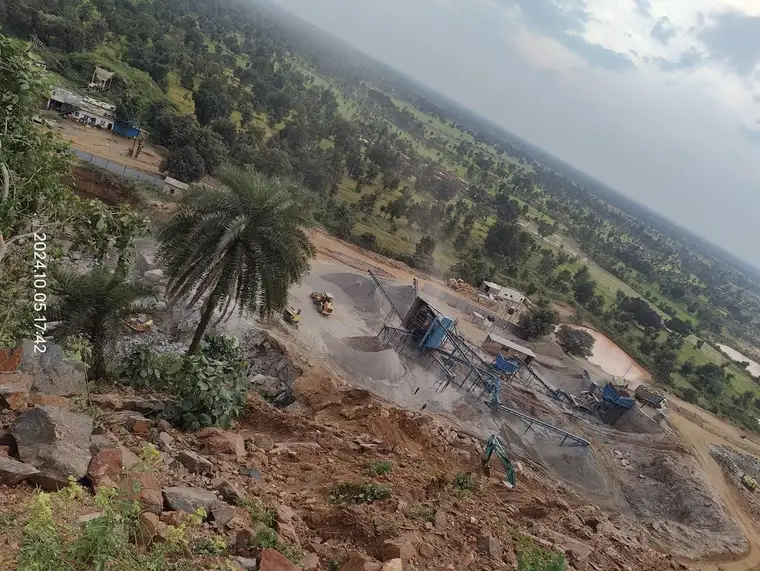
In short
- A per-tonne crushing rate normally contains the plant, its erection, the operators, maintenance, wear parts and the risk of downtime.
- Power or genset diesel, royalty, transit passes and the lease normally sit outside it and follow whoever holds the lease.
- Feed is the biggest swing item. A rate that covers drilling, blasting and hauling rock to the hopper cannot be set against a crushing-only rate.
- Monthly volume, rock hardness, the grading mix, contract length and the mobilisation distance are what move the number.
- Compare two quotes on scope first, line by line. Compare the rates only after that.
A purchase desk receives two quotes for crushing on the same package, and one is well below the other. The lower one gets circled. Three months later the project is paying for diesel and a mining contractor that nobody had put in the comparison.
A per-tonne crushing rate is a price for finished material. Inside it sit the plant, the people who run it and everything the rock wears out. Outside it, or agreed as separate lines, sit the items that depend on whose rock it is: power, royalty, transit passes, the lease and, above all, the feed. Two quotes can only be compared once those lines match.
What a tonne means in the quote
Start with the unit. We quote per tonne of finished material, against the grading and the monthly volume you need. Finished means it has come off the last screen deck in a size the contract asks for and crossed a calibrated weighbridge.
That is not tonnes of rock fed to the hopper, and it is not a volume measured in a tipper body or a stack. If one quote is per tonne of product and the other is per tonne of feed or per cubic metre, they are in different units and the lower figure means nothing yet. Converting tonnes, cubic metres and brass shows how far apart those units sit.
What sits inside the rate
- The plant. A three-stage plant is a large capital item. Under a crushing contract you pay for it by the tonne while you use it, and it leaves when the road is finished.
- Erection and commissioning. Foundations, structure, electricals, belts and the trial run.
- The crew. Plant operator, jaw and cone attendants, electrician and fitter, on site for the length of the job.
- Maintenance and wear parts. Jaw plates, cone liners, screen mesh, belts and bearings, stocked at the plant.
- Downtime. The least visible item and the most valuable one.
Downtime deserves a sentence of its own. If the plant is stopped, no tonnes cross the weighbridge and the operator earns nothing that day, while the crew and the plant cost the same as they did yesterday. That is why a contractor paid per tonne keeps the spare liner on the shelf. When a plant is run on your site under contract, this risk is the main thing the rate buys.
What sits outside it, or is agreed separately
| Item | Usually inside the rate | Usually outside or agreed separately |
|---|---|---|
| Plant and its capital cost | Yes | No |
| Foundations, erection, commissioning | Yes | No |
| Operators, fitter, electrician | Yes | No |
| Maintenance and breakdown repair | Yes | No |
| Jaw plates, cone liners, mesh, belts, bearings | Yes | No |
| Output lost while the plant is down | Yes, as the operator's loss | No |
| Power or genset diesel | Sometimes | Agreed up front, often the client's |
| Royalty and transit passes | Rarely | Follows whoever holds the lease |
| The mineral lease | No | The lease holder's, usually the client |
| Feed: drilling, blasting, loading, hauling to the hopper | Only in a combined mining and crushing rate | A separate scope otherwise |
| Haulage from the plant to the road head | No | A delivered rate or the client's own fleet |
| Water for dust suppression and wet mix | Sometimes | Agreed up front |
| Pollution board consents for the plant | Sometimes | Agreed up front |
On most of our contracts the client holds the lease and we hold the plant, the crew and the output number. Every row marked sometimes is written down before mobilisation.
Royalty and transit passes cause more confusion than any other line, because they are charged by the state on quantity and so look as if they belong in a per-tonne rate. They belong to the mineral, not to the crushing. Royalty and transit pass paperwork follows a load through it.
Feed is the line that changes everything
A crusher makes nothing until there is rock in the hopper. Getting it there means stripping overburden, drilling, blasting, breaking oversize, loading and hauling: a separate operation with its own excavators, drilling machines, tippers and licensed shotfirers.
Contracts split this in two ways. In the first, you or your mining contractor deliver shot rock to the hopper and the crushing contractor starts from there. In the second, one firm takes the job from the face to the stockpile and quotes a single rate for mining and crushing together. Both are normal, and they produce very different numbers.
What moves the rate
Monthly volume. A plant and its crew cost much the same whether they produce a full month or half of one. A 250 TPH three-stage plant is rated for up to 1,00,000 MT a month on two shifts. Ask it for a third of that and each tonne carries a much larger share of the standing cost.
The rock. Hard, abrasive rock eats wear parts. Basalt and granite go through liners far faster than sandstone does, and the contractor prices that in after seeing the source. See what wears on a crusher.
The grading mix. GSB uses nearly everything a plant makes. A contract that wants mostly single sizes, or a high share of 10mm and dust, sends more material back round the tertiary stage, lowers the tonnes per shift and leaves a surplus of sizes nobody ordered.
Contract length, feed and access. Moving and erecting a plant costs the same for a six-month job as for a three-year one, so short contracts carry more mobilisation in every tonne. Well-fragmented feed crushes faster than oversize, and a site at the end of a bad road costs more to reach.
Comparing two quotes
- Put both on the same unit: tonnes of finished product over a weighbridge.
- Mark where each scope starts and ends. Face or hopper at one end, stockpile or road head at the other.
- Check both are priced on the same grading mix and the same monthly volume.
- List who pays for power or diesel, royalty, transit passes and water in each.
- Ask what each contractor is paid when the plant is down for a week.
- Ask what is charged for mobilisation and demobilisation, and whether it is in the rate or a lump sum.
Only when the two columns match does the rate mean anything. A bidder who cannot answer the fifth question clearly has told you more than the price difference does.
Standards and sources
- Rate basis, inclusions, plant output and lease arrangements: SM Infra's own operating record
- Royalty and transit pass charges are set by each state; check the current schedule with the district mining office (no figures quoted here)
Your contract and its technical schedules override anything written here. Check the clause before you build to it.