
In short
- Fix the base rate per tonne by product, the delivery point, the grading and test regime, the weighing method, a monthly volume band and the payment cycle.
- Diesel and royalty usually float. Each is written down at the start with a base value and an agreed way of adjusting it, so a change is arithmetic and not a negotiation.
- Shortfall runs both ways. Write in what happens when the supplier cannot deliver and when the buyer cannot lift.
- Monsoon months, a change of grading mid-project and the transit paperwork each need a line of their own.
A highway package buys aggregate for eighteen months to three years. Over that time diesel moves, the state revises royalty, a monsoon or two passes and the local spot market rises and falls with every other project in the district. A purchase order priced on this month's conditions is out of date before the first layer of GSB is finished.
A rate contract is the answer most packages arrive at. Fix what the supplier controls: the base rate per tonne for each product, the delivery point, the grading, the weighing and the payment cycle. Leave floating the two costs neither side controls, diesel and royalty, and agree at the start exactly how each one adjusts.
How a volume contract works
The buyer commits to a total quantity over the life of the package and a band of monthly offtake. The supplier commits plant capacity and tippers to that band and holds the base rate for the period. Each side gives something up. You lose the freedom to chase a cheaper load in a slack month, and the supplier loses the freedom to sell your allocation to somebody paying more in a tight one.
That second point is what the contract buys. In the dry months every project in a region wants material at once, and a spot buyer finds out where they stand in the queue. A volume contract for aggregate supply puts your tonnage ahead of that queue at a rate agreed when nobody was desperate.
What to fix
- Base rate per tonne, by product. GSB, WMM, 40mm, 20mm, 10mm and dust each carry their own rate. One blended figure hides which product is paying for which. The materials page lists them.
- Delivery point. A chainage or a named stockyard, with the lead it assumes. If the work front will move, say how the rate moves with it.
- Grading and test regime. The grading table for each product, which lab tests it, how often samples are pulled and who pays.
- Weighing method. Whose weighbridge gives the billing weight, and what happens when a second bridge disagrees.
- Monthly volume band. A minimum and a maximum, not a single number. No programme is that precise.
- Payment cycle. The billing date, the documents that make a bill complete, and the days allowed for payment.
The delivery point deserves the most care, because haulage is often the largest part of a delivered rate. How lead distance drives the delivered rate explains why a few kilometres matter.
What floats and why
Diesel and royalty are the two things that usually sit outside a fixed rate. Neither is in the supplier's hands. Diesel is priced at the pump and runs through the whole operation, from the excavators at the face to every kilometre the tippers cover. Royalty is set by the state government and can be revised in the middle of a package.
Ask a supplier to hold both for three years and the worst case gets priced in, so you overpay from the first month. Floating them is cheaper for both sides, provided the mechanism is written down.
For diesel that means a base price on a stated date from a stated source, the share of the rate treated as diesel, how far the price must move before the rate is revised, and how often. Royalty is simpler: the rate on the contract date, and a line saying any notified change passes through at actuals from the day it takes effect. Royalty and transit passes covers the paperwork behind that line.
Shortfall on either side
Contracts tend to be precise about what the supplier owes and silent about what the buyer owes. Both failures happen. A plant can be down or tippers stuck behind a closed road. Equally, the buyer's paver can be idle or a stretch can be waiting for land.
For supplier shortfall, write down the remedy: make-up within a stated period, your right to buy the gap elsewhere, and who bears the difference in price. For buyer shortfall, write down what happens to tonnage not lifted: whether it rolls into the next month, and when the supplier is free to release the capacity to someone else. A plant and a tipper fleet held for an order that is not lifted cost money, and a contract that ignores this gets a rate with that risk priced in.
Monsoon, grading changes and paperwork
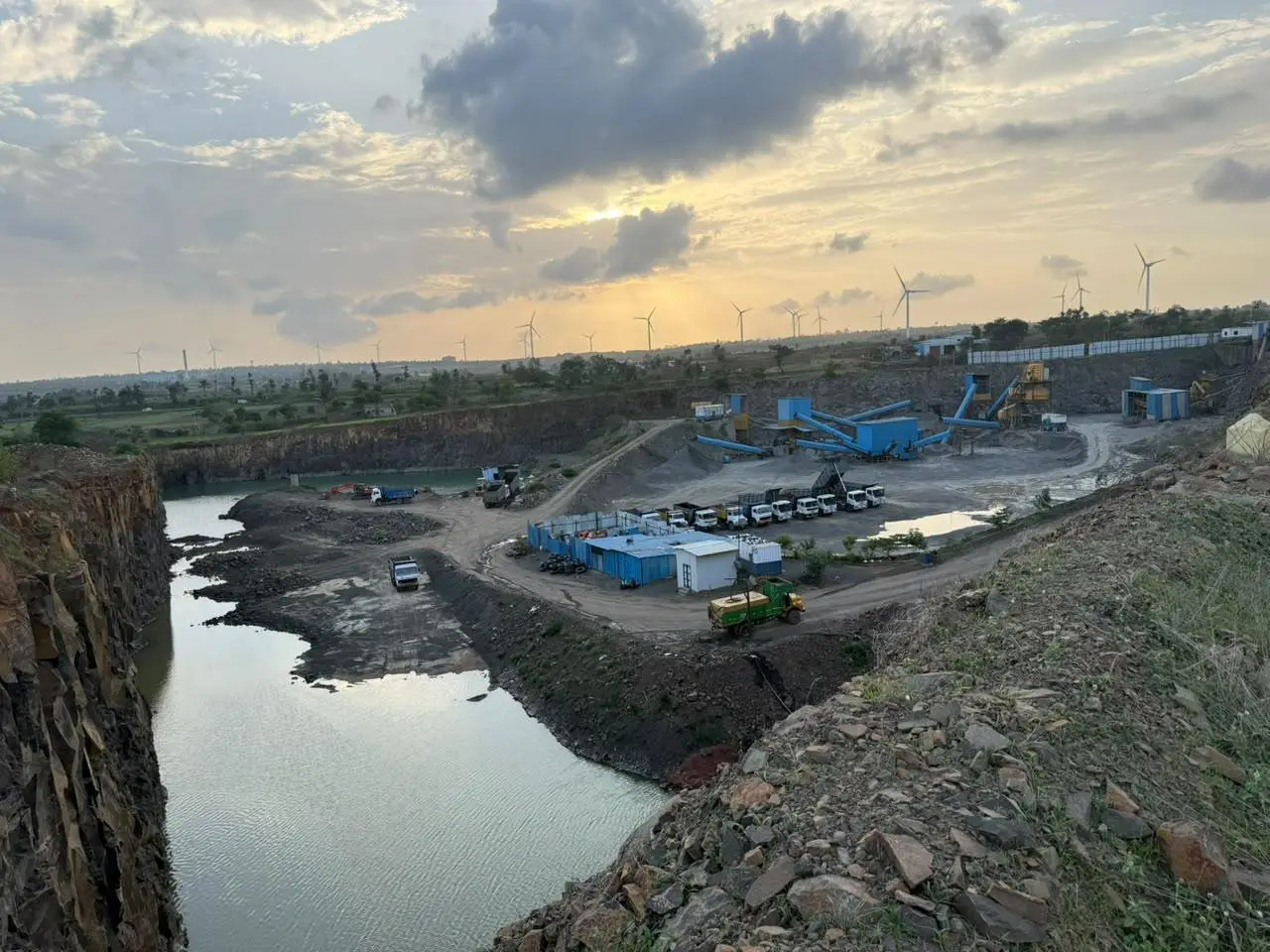
Monsoon months. Laying of GSB and WMM slows or stops in heavy rain even when the plant can run. Either the monthly band drops for those months, or the supplier produces to stockpile and the contract says where the stock sits, who owns it and when it is billed. Planning a quarry and crusher site for the monsoon goes through what actually stops.
A change of grading. Designs get revised. On the plant a new grading means the screen decks are reset, which is a shift of work, not a renegotiation. The contract should still say how much notice is needed and what happens to stock already produced to the old grading.
Transit paperwork. Every load on a public road travels with royalty and transit documents, and they follow whoever holds the lease. Name the party that generates the pass, the party that bears the cost and the party that keeps the copies.
Clause by clause
| Clause | What to pin down | What goes wrong if you do not |
|---|---|---|
| Base rate | Per tonne, per product, with the date it is fixed on | A blended rate is disputed the first month the product mix shifts |
| Delivery point | Chainage or yard, and the lead assumed | The front moves and the haulage argument begins |
| Grading and tests | Grading table, lab, sampling frequency, who pays | A failed sample and no agreed procedure for the stack already delivered |
| Weighing | The billing bridge, and a tolerance between two bridges | A shortage claim on every bill |
| Monthly band | Minimum and maximum offtake | The supplier under-resources, or the buyer is held to tonnes the programme cannot take |
| Diesel | Base price, source, diesel share, trigger and frequency | A renegotiation every time the pump price moves |
| Royalty | Rate on the contract date, pass-through at actuals | A standoff over who absorbs a notified revision |
| Monsoon and shortfall | Reduced band or stockpiling; remedy for non-supply and non-lifting | One side carries a loss the contract never mentioned |
| Transit passes | Who generates, who pays, who holds copies | Loads stopped on the road, or bills held for missing documents |
A one-page schedule that answers each row is better than twenty pages that leave them out. This is a supplier's working checklist, not legal advice.
We hold rates on volume contracts over the life of a package. Send the product list, the monthly band and the delivery chainages, and the rate that comes back will have the diesel and royalty base figures on the same page. Month-end reconciliation against weighbridge slips is the other half of making the contract work.
Standards and sources
- Products, rate-contract practice and the treatment of diesel and royalty: SM Infra's own operating record
- General supply-contract practice. No statutory figure is quoted, and the contract between the parties governs
Your contract and its technical schedules override anything written here. Check the clause before you build to it.