
In short
- Royalty is the state's charge on mineral removed from the ground. Stone is a minor mineral, so each state makes its own rules and pass system under section 15 of the MMDR Act, 1957.
- A transit pass shows that one load, on one vehicle, came from a legal source with royalty accounted for.
- The pass has a different name in each state: eMM-11 in Uttar Pradesh, e-Rawanna in Rajasthan, DigiTP under Mahakhanij 2.0 in Maharashtra, the Mineral Dispatch Permit in Karnataka.
- The pass, the weighbridge slip, the vehicle number and the destination should agree. A mismatch is what gets a load stopped.
- Who holds the paperwork follows the lease. Settle it before the first load moves.
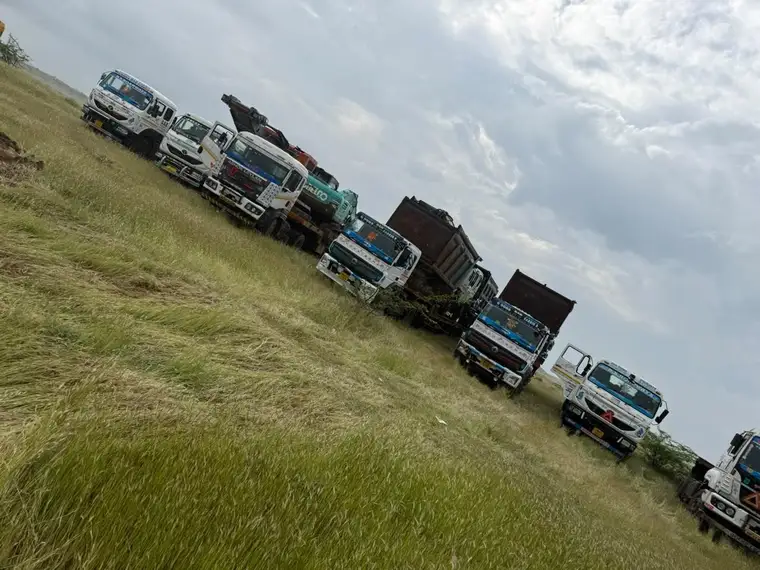
A tipper of GSB is stopped at a mining check post on its way to site. The driver has a weighbridge slip and a delivery challan. He has no valid transit pass. The load, and quite possibly the vehicle, stay where they are, and the grader at the road head runs out of material that afternoon.
Royalty is what the state charges for mineral taken out of the ground, and the transit pass is the document that shows a given load has been accounted for. It names the source, the mineral, the quantity, the vehicle and the destination, and it rides in the cab. If you buy aggregate you want one for every load, because the consequences of a missing one reach the buyer too. This is orientation, not legal advice: confirm the current rule with the mining department of the state concerned.
What royalty is
The lease holder pays the state for each unit of mineral removed. Stone quarried for aggregate is a minor mineral, a class defined in section 3(e) of the Mines and Minerals (Development and Regulation) Act, 1957, and section 15 of that Act hands the rule-making for minor minerals to the state governments. So the rate schedule, the unit it is charged on, the form of the pass and the portal that issues it all change at the state border.
Royalty is charged on quantity, at rates in a schedule to the state's rules, and schedules are revised. We have printed no rate, because it would be wrong for the next state and soon out of date in this one. Ask the district mining office for the schedule in force and note the unit: where it is written per cubic metre and your weighbridge works in tonnes, the conversion factor becomes part of the bill. Converting tonnes, cubic metres and brass deals with that.
On top of royalty the lease holder pays a contribution to the District Mineral Foundation, a fund for the districts that mining affects. For minor minerals the state sets it, and it is paid in addition to royalty. In Uttar Pradesh it has been 10 percent of the royalty under the state's 2017 rules, as the Comptroller and Auditor General reports it. Confirm the current figure.
What a transit pass does
A lease holder may dispatch only what has been accounted for, and the pass is how the state keeps track. Most of the states in the table below now issue it through an online system, and officials check it on the road.
A second use has grown around it. Stockists and crusher plants have to account for the mineral they hold, so the pass doubles as a stock ledger.
The pass by state
| State | Rules | Pass or system |
|---|---|---|
| Uttar Pradesh | UP Minor Minerals (Concession) Rules, 2021 | e-Form MM-11 (eMM-11), electronic since August 2017 |
| Rajasthan | Rajasthan Minor Mineral Concession Rules, 2017 | e-Rawanna, the online rawanna or transit pass |
| Madhya Pradesh | MP Minor Mineral Rules, 1996, and the 2022 illegal mining and transportation rules | A transit pass for each trip; the state's mining portal is e-Khanij |
| Maharashtra | Maharashtra Minor Mineral Extraction (Development and Regulation) Rules, 2013 | Mahakhanij 2.0, launched in September 2026, with QR-coded DigiTP passes |
| Gujarat | Gujarat Minor Mineral Concession Rules, 2017 | Online royalty pass |
| Karnataka | Karnataka Minor Mineral Concession Rules, 1994 | Mineral Dispatch Permit (MDP); crushers need an MDRO before dispatch |
As far as we could confirm in October 2026. Portals change, Maharashtra's most recently. Check the current process with the district mining office.
E-ravanna is e-Rawanna spelt as it sounds. ISTP, the inter-state transit pass, is listed as a service on Uttar Pradesh's mining portal. We could not verify its current procedure, so if your aggregate crosses a state border, ask the supplier to show how that pass is raised before you agree a rate.
Why the buyer should care
It is tempting to treat royalty as the quarry's business. Three things make it yours.
- The road. A load without a valid pass is treated as illegally transported mineral. The usual consequences are seizure of the material and the vehicle and a penalty to release them. The amounts differ by state. The lost day is the same everywhere.
- The bill. Government contracts commonly require the contractor to show that royalty has been paid on the mineral in the work, and recover against quantity that cannot be supported. The passes are that support. Read the royalty clause in your own contract.
- The source. A pass can only be raised against a live lease account. Material that arrives without one may have come from ground with no lease or no clearance. How a stone quarry is permitted lists what a lawful source holds.
What should match what
The check takes a minute a load.
- Vehicle number on the pass against the plate on the tipper.
- Quantity on the pass against the net weight on the weighbridge slip.
- Mineral on the pass against what is in the body. Schedules such as Uttar Pradesh's list boulder and gitti separately.
- Source and destination against your supplier's lease or plant and your own site.
- Date and time against the delivery. A pass presented for a second trip is a familiar abuse.
Who holds the paperwork
It follows the lease. Three arrangements cover most highway work.
- You buy delivered material. The supplier raises the pass and carries the royalty in the delivered rate. Loads from our own plants at Bara in Uttar Pradesh and Asotra in Rajasthan travel under those states' systems, with a weighbridge slip against every dispatch.
- You hold the lease and a contractor works it. The mineral is yours, so the lease account, the royalty and the passes are in your name. Most of our mining and crushing is done this way. Who generates the passes each day is settled at the start.
- A third party holds the lease. Whoever sells you the rock owes you the pass. Make it a condition of payment.
Rate movements need settling too. On our volume contracts, diesel and royalty are the two items that usually sit outside a fixed rate, and both are written down at the start. What to fix and what to leave floating in an aggregate rate contract goes into the clause. If you want material supplied to your road head with the passes in order, tell us which state the road is in and where the road head is.
Standards and sources
- Mines and Minerals (Development and Regulation) Act, 1957, section 3(e) (minor minerals) and section 15 (state rule-making)
- Uttar Pradesh Minor Minerals (Concession) Rules, 2021, rule 36(2) and e-Form MM-11
- Rajasthan Minor Mineral Concession Rules, 2017 (e-Rawanna)
- Madhya Pradesh Minor Mineral Rules, 1996, and Madhya Pradesh Mineral (Prevention of Illegal Mining, Transportation and Storage) Rules, 2022
- Maharashtra Minor Mineral Extraction (Development and Regulation) Rules, 2013; Government Resolution of 1 November 2023 on secondary transport passes; Mahakhanij 2.0 and DigiTP passes, launched September 2026
- Gujarat Minor Mineral Concession Rules, 2017, and Karnataka Minor Mineral Concession Rules, 1994 (Mineral Dispatch Permit)
- District Mineral Foundation contribution in Uttar Pradesh: UP District Mineral Foundation Trust Rules, 2017, as reported by the Comptroller and Auditor General of India
- Plant locations, weighbridge practice and contract terms: SM Infra's own operating record
Your contract and its technical schedules override anything written here. Check the clause before you build to it.