
In short
- Stone in Prayagraj district lies south of the Yamuna, in Bara, Meja and Koraon tehsils, where the Vindhyan sandstone comes to the surface. Shankargarh in Bara is the best-known quarrying area.
- We supply GSB, WMM, 40mm, 20mm, 10mm, crusher dust and boulder from our own plant on our own lease at Bara, on our own tippers, at a per-tonne delivered rate with a weighbridge slip for each load.
- The rate here turns on lead distance and river crossings. Which side of the Yamuna and the Ganga your site is on matters more than anything at the plant.
- Inside about 60 km of the plant a delivered rate is usually competitive. Beyond that, a plant nearer the site normally beats hauling.
- For a rate we need four things: where, what material, how much a month and when.
Ask for an aggregate rate in Prayagraj and the first thing a supplier asks back is which side of the river you are on. That is not small talk. The district is split by the Yamuna and the Ganga, the stone is all on one side, and a great deal of the construction is on the other.
The short answer: crushed stone around Prayagraj comes from the trans-Yamuna tehsils of Bara, Meja and Koraon, and the delivered rate is decided mainly by how far, and across which bridges, it has to travel to reach you. We crush at Bara and our office is at Meja Khas, so this is home ground.
Where the stone comes from
Prayagraj district has two kinds of ground. North of the rivers, the city, the doab between the Ganga and the Yamuna and the country beyond the Ganga are all alluvial plain: soil and sand, with no rock to quarry. South of the Yamuna, in the area people call Yamunapar, the Vindhyan sandstone comes to the surface. That is where the quarries and the crushers are.
The rock runs through Bara, Meja and Koraon tehsils, and Shankargarh, in Bara tehsil, is the best-known quarrying area of the three. For a buyer in the city the consequence is plain. There is no local stone on the north bank. Every tonne of gitti, as crushed stone aggregate is called here, has crossed a river bridge on a tipper before it reaches a site in the city or the doab.
Other crushed-stone belts feed eastern and central Uttar Pradesh as well: Bharatkoop in Chitrakoot district, Kabrai in Mahoba district, Dalla and Billi-Markundi in Sonbhadra, and the Ahraura and Chunar area of Mirzapur. Which one is cheapest at your gate depends on where the gate is.
What we supply from Bara
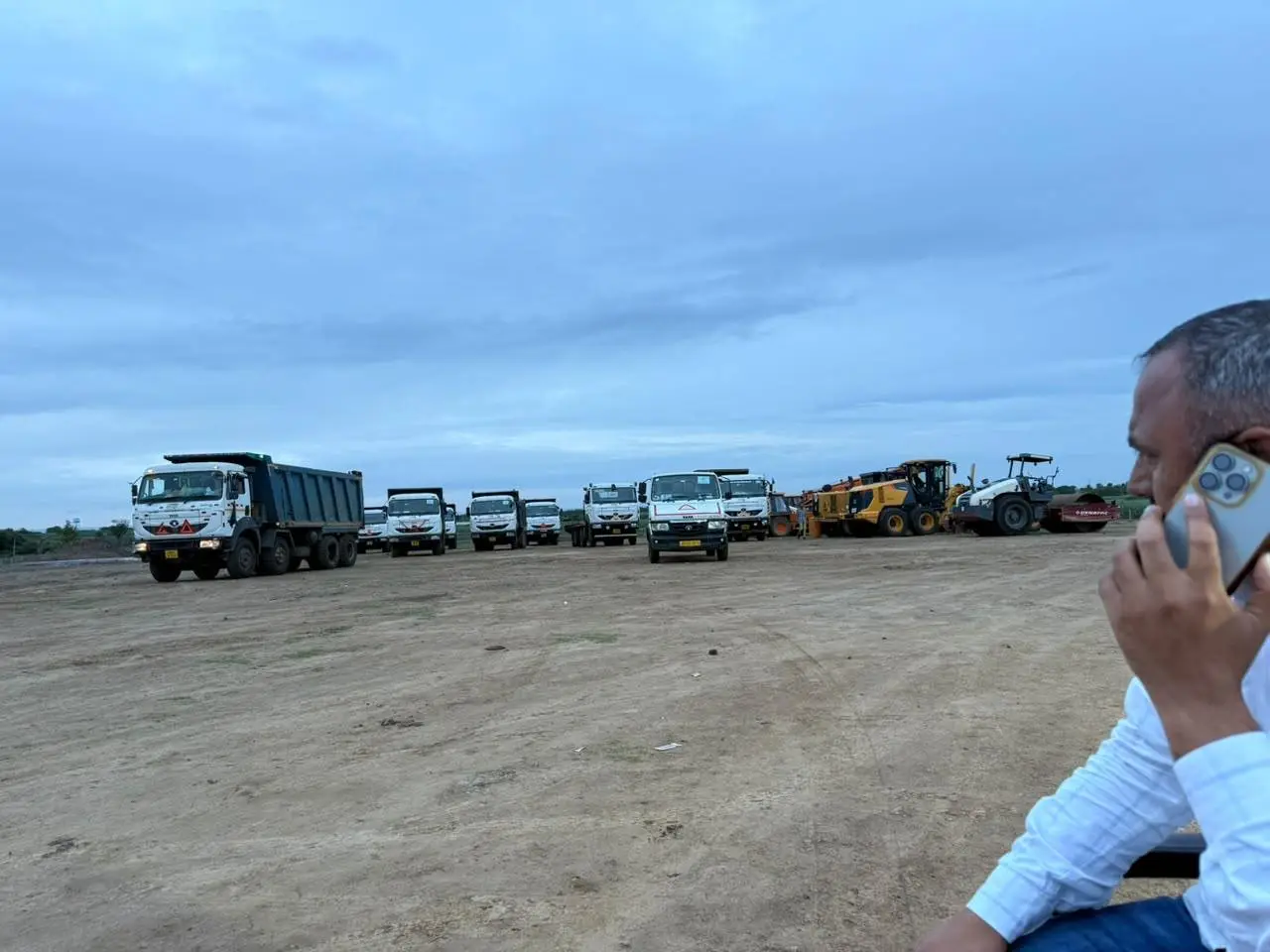
The Bajarang Stone Crusher Plant at Bara is one of our own plants, on our own lease. It is not tied to a single contract. It sells to regional infrastructure work on the open market, which is why it can take an enquiry from a contractor we have never worked with. The products are the ones a road uses, and each has its uses listed on the materials page.
| Material | Where it goes in the road | Spec reference |
|---|---|---|
| GSB (Granular Sub-base) | First granular layer above the sub-grade | MoRTH Clause 401, Grading I to VI |
| WMM (Wet Mix Macadam) | Base course, directly under the bituminous layers | MoRTH Clause 406 |
| 40mm aggregate | Lean concrete and drainage layers | As your contract specifies |
| 20mm aggregate | Bituminous macadam and structural concrete | As your contract specifies |
| 10mm aggregate | Wearing course and finer concrete | As your contract specifies |
| Crusher dust | Fine aggregate and filler | As your contract specifies |
| Boulder | Protection works such as pitching and gabion filling | Sized, not crushed |
Tell us the grading table and the layer, and the screen decks are set to it. Standards are revised from time to time, and the grading in your contract is the one that governs.
If you are not sure which of the two layer materials your drawing is asking for, the difference between GSB and WMM is the place to start.
Our work in the district
Our crews ran the crusher plant for the Prayagraj four-lane widening for MKC Buildcon in 2023 to 2024, under Sansar Infra LLP: 10,00,000 MT, drilled, blasted and crushed into GSB, WMM, dust, 10mm and 20mm. A plant of ours is running now on the Prayagraj Ring Road for Kaluwala Construction, dispatching to several chainages at once. The rest of the record is on the projects page.
The reason to mention it is narrow. Sandstone behaves in its own way in a crusher, differently from the basalt and granite we work in other states, and our crews have taken the rock of this district through a full highway package.
How it is delivered
Loads go out on our own tippers. The rate is quoted per tonne delivered to your site, material and haulage in one figure, and each load carries a slip from a calibrated weighbridge at the plant. Dispatch weight is the billed weight. Weighbridge slips and month-end reconciliation explains what to check on that slip.
For work that runs over many months we hold the base rate on a volume contract, with diesel and royalty written down at the start as the two things that can move. The terms are set out on the aggregate supply page.
What decides the rate around Prayagraj
- Lead distance. Haulage is usually the largest part of a delivered rate. Inside about 60 km of the plant, a delivered rate from us is usually competitive. Beyond that, deploying a plant nearer your site normally beats hauling.
- River crossings. A site in Yamunapar is reached without crossing anything. A site in the city or the doab is across the Yamuna. A site beyond the Ganga has that river to cross too, either after the Yamuna or downstream of the Sangam. Each crossing funnels tippers onto a bridge, and the queue shows in the trips each tipper makes in a shift.
- Grading. GSB, WMM and single-size gitti are different products at different rates. Say which one, and to which grading.
- Monthly volume. A steady monthly quantity lets us commit tippers to your route. A stop-start order costs more per tonne to serve.
- Monsoon. Quarry floors, approach roads and laying all slow down in the rains. A requirement that falls in those months is worth raising early, because stock built before the rains is how it gets met.
What to send for a rate
- Where: the site as a map pin or a chainage, and which bank of which river it is on.
- What: the material and the grading.
- How much a month, and for how many months.
- When the first load is needed.
Those four are enough for a useful answer on the first call. Our office is on Meja Bhatuti Road, Meja Khas, Prayagraj 212302, and the phone number is on the contact page. If your site turns out to be too far for hauling to make sense, we will say that as well, and talk about a plant closer to it.
Standards and sources
- MoRTH Specifications for Road and Bridge Works: Clause 401 (Granular Sub-base) and Clause 406 (Wet Mix Macadam), cited by clause only
- Plant, project, tonnage and delivery details: SM Infra's own operating record. Work before October 2024 was carried out under Sansar Infra LLP
Your contract and its technical schedules override anything written here. Check the clause before you build to it.