
In short
- The crusher is seldom what stops. Laying of GSB and WMM on the road stops first in heavy rain, haulage slows next, and the pit floor is lost when water collects.
- Water goes to the lowest point of the pit. Without a sump cut for it and a pump to empty it, that point is the working floor.
- Wet, sticky feed blinds screens and cakes fines, so output falls and grading drifts even with every machine running.
- The useful work is done before June: stockpiles by product, drains and sumps cut, the haul road metalled, the plant serviced, and monsoon months agreed in the rate contract.
The monsoon does not shut a quarry the way a stay order does. It takes a slice off everything. The pit holds water, the haul road softens, the feed arrives wet, the tippers take longer, and at the far end the road gang cannot lay what is delivered. Output falls without any single machine having failed.
What stops, in order: laying of GSB and WMM on the road side stops first in heavy rain, haulage slows next, and the pit floor is lost for a few days at a time when water collects. The crusher itself can usually run. The planning that matters is done before June, and most of it is stockpile, drainage and road.
Water in the pit
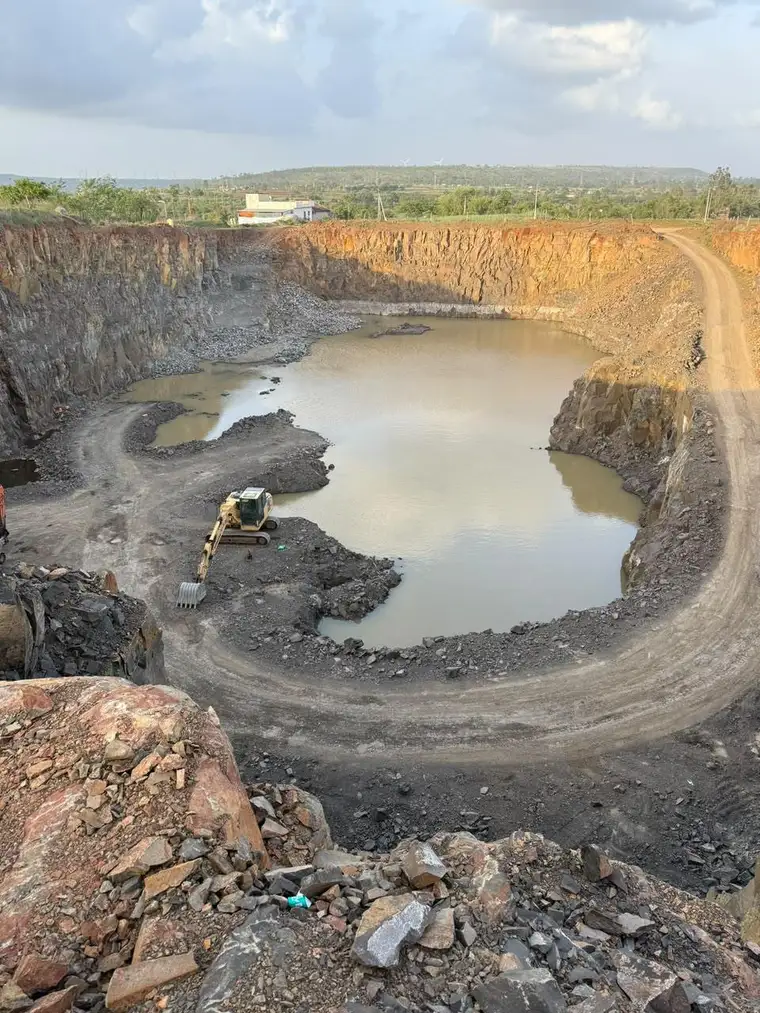
A quarry pit is a hole, and water finds the bottom of it. Rain falls straight in, run-off arrives from the ground around the crest, and a pit that has gone below the water table takes seepage through the face as well. The lowest bench is usually the one being worked, so the place the water collects is the place the excavator and the drill need to stand.
The answer is a sump: a low point cut on purpose, away from the working face, that the floor drains towards, with a pump and a discharge line that carries the water clear of the lease without flooding somebody's field. A sump cut after the first storm is cut under water. Garland drains around the crest keep surface run-off from entering at all, and they are cheap next to pumping the same water back out.
Where the floor does flood, production moves to a higher bench, if one has been prepared. That bench is developed in the dry season. It cannot be found in July.
Overburden and haul roads
Wet overburden is heavier, stickier and slower to handle. It clings to buckets and tipper bodies, the dump goes soft and tippers bog at the tip edge. The sensible sequence is to strip ahead in the dry months and have exposed rock to work when it is wet. Overburden and stripping ratio explains how much ground that means opening.
The haul road is where a wet season costs the most for the least obvious reason. An unmetalled road under loaded tippers turns to ruts, the ruts hold water, and every pass makes them deeper. Cycle times stretch and tyres are cut. A road with a crushed-stone surface, a cross-fall and side drains carries traffic through the rains. Building a quarry haul road covers the section, and it is ordinary earthwork that has to be finished before the first heavy rain.
Wet feed at the plant
A crusher will break wet rock. The trouble starts at the screens. Clay and fines in wet feed stick to the mesh and close the openings, which operators call blinding. Material that should fall through rides over the deck into the larger size, the grading drifts, and output drops because the plant is recirculating stone it should already have sized.
Fines suffer most. Wet crusher dust cakes in chutes and on belts. GSB and WMM depend on a controlled share of fines, so they are the products most likely to wander out of grading in a wet week. The measures are plain: keep clayey overburden out of the feed, clean the decks more often, and pull grading samples more often than in the dry season.
Moisture also shows on the weighbridge. Wet material weighs more than dry. Decide in advance whether billing is on weight as dispatched, and say so in the contract.
Drilling and blasting in the rains
Drilling carries on in light rain and stops on a flooded bench. The bigger change is in the holes. Blast holes on a wet bench fill with water, and water in a hole changes which explosive product is suitable and how the hole is loaded. That is the licensed shotfirer's decision, made at the face on the day.
Thunderstorms are the other constraint. Charging is not done with lightning about, so shots are lost to weather on days when everything else could have worked. A stock of blasted rock lying on the floor before a wet spell keeps the plant fed through it.
Haulage and the road side
Outside the lease the same rain is falling on the approach road and on the project. Tipper cycle times lengthen on wet, broken roads, low causeways close, and the fleet that delivered the daily tonnage in May delivers less of it in July. Working out tipper numbers from cycle time shows why a modest increase in cycle time takes a visible bite out of the day.
Then there is the customer's side. GSB and WMM are laid and compacted at a controlled moisture content, on a layer below that has to be firm. In sustained rain the road gang can manage neither, so laying stops even though the plant can run and the tippers can travel. This, and not the crusher, is the usual limit on monsoon production.
What to do before June
| Activity | What rain does | What to do before June |
|---|---|---|
| Pit floor | Floods at the lowest bench | Cut a sump away from the face, install pump and discharge line, cut garland drains |
| Overburden stripping | Wet spoil sticks and dumps go soft | Strip ahead in the dry months; shape the dump to shed water |
| Haul road | Ruts, long cycles, tyre and suspension damage | Metal the surface, give it cross-fall and side drains |
| Drilling and blasting | Wet holes, and shots lost to storms | Build a stock of blasted rock; leave product choice to the shotfirer |
| Crushing and screening | Screens blind, fines cake, grading drifts | Service the plant, hold spare mesh and wear parts |
| Laying on the road | GSB and WMM laying stops in sustained rain | Build stock by product, on a firm drained base |
June is the usual marker across much of the country. Work back from the normal onset in your own district, which may be earlier or later.
Build the stockpile by product against the laying programme, not as one large heap of whatever the plant made most easily. If the first dry spell needs WMM for a stretch that is ready to receive it, a yard full of 40mm is no help.
Hold wear parts and screen mesh at site too, because a part that takes weeks to arrive in the dry season does not arrive faster over a washed-out road. And settle the commercial side: an aggregate rate contract should say whether the monthly quantity drops in the monsoon or the supplier produces to stock.
Standards and sources
- Mobilisation periods and site practice: SM Infra's own operating record
- General quarry and crushing-plant practice. No specification or statutory figure is quoted, and loading and firing decisions rest with the licensed shotfirer on site
Your contract and its technical schedules override anything written here. Check the clause before you build to it.