
In short
- On a normal site a quarry face goes from award to first tonne in three to six weeks: two weeks to mobilise, the rest to strip overburden and cut a working bench.
- The order is fixed: survey, mobilise, strip, cut the first bench and floor, drill and blast, load and haul.
- None of it can start until the lease, the clearances and the explosives licensing exist on paper.
- The first bench is the slowest rock a quarry will ever produce, and every later blast inherits its geometry.
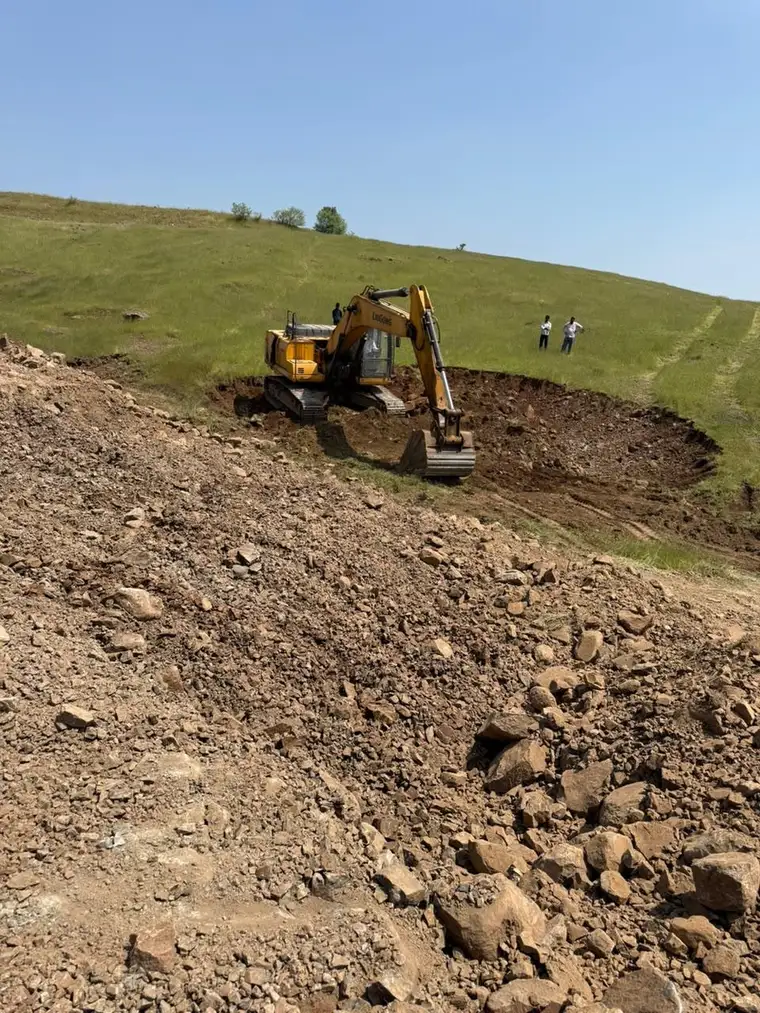
A contractor wins a package, a lease is identified off the alignment, and the programme shows aggregate production starting in month two. On the ground there is a hillside with grass on it.
Getting from that hillside to the first tonne of rock at the hopper takes three to six weeks on a normal site. Two weeks go on mobilisation. The rest goes on stripping overburden down to sound rock and cutting a bench that can be drilled, blasted and loaded safely. The sequence is the same everywhere. The rock is not.
The sequence and how long it takes
| Stage | What happens | Typical time |
|---|---|---|
| Survey and assessment | Rock type, overburden depth, access, water, where a plant can stand | One visit, before the rate is agreed |
| Mobilisation | Machines and crew moved in. Camp, fuel, workshop and magazine set up | Two weeks |
| Clearing and stripping | Vegetation and topsoil off, overburden taken down to sound rock | Two to four weeks from surface to sound rock on most sites |
| First bench and floor | A face and a level working floor cut into sound rock | Inside the same two to four weeks |
| First drill and blast | Pattern drilled, shot fired by a licensed shotfirer | Follows the bench; no separate figure |
| Load and haul | Excavators to tippers, tippers to hopper | First tonne three to six weeks after award |
Durations are from our own operating record on normal sites.
What the first visit looks for
Five things, and between them they decide most of the cost.
- Rock type. It sets drilling rates, wear at the crusher and whether the stone will pass the tests the road specification asks for.
- Overburden depth. How many cubic metres stand between the surface and the first saleable tonne. Overburden and stripping ratio has the arithmetic.
- Access. Whether a low-bed can reach the lease at all, and what the haul to the hopper will be like loaded.
- Water. Enough for dust suppression, the camp and the plant, and the opposite problem: where rain will collect once there is a pit.
- Where a plant can stand. Level ground close enough to keep the lead short, clear of the blasting danger zone, and not on rock you will want to quarry in the second year.
Paperwork that has to exist first
No machine should move until three sets of paper are in order: the lease with its approved mining plan, the environmental clearance and pollution board consents, and the explosives licensing for the magazine and the people who will fire shots. None runs at the speed of a construction programme. How stone quarrying is permitted and who is allowed to blast set out the detail. Royalty and transit passes belong on the same list.
One notice is easy to miss because it has a waiting period built in. Regulation 106(2)(b) of the Metalliferous Mines Regulations, 1961, which DGMS has applied to stone quarries for decades and which are being replaced by regulations under the OSH Code, 2020, calls for at least 60 days' written notice to the Chief Inspector and the Regional Inspector before deep-hole blasting or heavy machinery is used, with work then carried on under the conditions specified. Check the regulation currently in force, and count the days back from the date you want to fire.
Mobilisation comes before production
Two weeks covers moving excavators, drills, compressors, tippers and crew, and setting up what they depend on: a camp, a fuel store, a workshop and a licensed magazine. The temptation is to start stripping at once and build the workshop when something breaks. We set these up before production, because a site that opens without a workshop loses days to its first breakdown.
Stripping down to sound rock
Clearing comes first: vegetation and roots off, topsoil lifted and stacked apart because it is wanted again at restoration. Then the overburden, which in most stone quarries is soil, morrum and weathered rock, comes off with excavators and tippers until the machines are standing on sound rock. Rocky overburden is drilled and blasted instead, since a hydraulic breaker would take a month over it at ten times the cost.
Strip wider than the first bench strictly needs. The working area has to hold a drill, a compressor, an excavator and a turning tipper, and the edge above the face has to be kept clear of loose stone.
Why the first bench is slow
A production blast throws rock towards a free face, an open wall the burden can move into. A new quarry has no face. The first cut has to make one, by working into a slope from the side or by sinking a box cut into flat ground, and until it exists every shot is fighting confined rock. Holes are short because the surface is uneven, and the top of the rock is weathered and breaks badly.
So the first week of rock is poor value per metre drilled, and that is normal. What you are buying is geometry. A good first bench has a clean face of even height, a floor level enough for an excavator to sit flat and for water to run off, room for a tipper to turn and reverse under the bucket, and a ramp a loaded tipper can climb without a second attempt.
Bench height, width and face angle are regulated. For mechanised working with deep-hole blasting they come from the conditions attached to the permission more than from one number in the regulation, and the rules on bench geometry are set out separately. Cut the first bench to those conditions; reshaping a face later costs more.
First blast, first tonne
With a face and a floor, the pattern is drilled to a design for that rock and that bench, and the shot is fired by a licensed shotfirer. The first few shots are trials as much as production: fragmentation is checked against what the primary jaw will accept and the pattern adjusted, because oversize costs more at the hopper than it saves at the face. It is simpler to have one crew answerable for the hole and for the charge that goes in it.
Then excavators load tippers and tippers run to the hopper. Output climbs from that first tonne as the face widens.
What pushes the date out
- Poor access. If a low-bed cannot reach the lease, a road is built first.
- A monsoon start. Stripping in rain turns overburden to slurry, the haul road ruts and the new floor holds water.
- An uncleared lease. A crew can be on site in two weeks. A clearance cannot be hurried by putting more excavators on it, and paperwork is the single most common reason a quarry sits idle.
If you hold a lease, or are about to, our mining crews will walk it with you before you give anybody a programme date. We would sooner tell you about the weeks of stripping up front than afterwards.
Standards and sources
- Metalliferous Mines Regulations, 1961, regulation 106 (opencast workings), read with the Occupational Safety, Health and Working Conditions Code, 2020, in force from 21 November 2025; check the regulations currently in force
- Mobilisation and face-opening durations: SM Infra's own operating record
Your contract and its technical schedules override anything written here. Check the clause before you build to it.