
In short
- MoRTH Table 300-2 requires embankment at not less than 95%, and sub-grade (the top 500 mm) and earthen shoulders at not less than 97%, of the maximum dry density from the heavy compaction test, IS 2720 Part 8.
- Compacted layer thickness is capped at 250 mm with a vibratory roller and 200 mm with an 80 to 100 kN static roller (Clause 305.3.5.1).
- Moisture at rolling has to sit between 1% above and 2% below OMC. Outside that window, extra passes do not buy the density.
- Density is accepted on sets of ten tests, per 3,000 m2 of each embankment layer and per 2,000 m2 of sub-grade, with a statistical check on the mean.
Every earthwork drawing carries the same two numbers, and every site has somebody who reads them as a measure of how hard the roller worked. They are not. Ninety-five and ninety-seven per cent are the dry density of the soil in the layer, measured in a hole dug after rolling, divided by the highest dry density the same soil reached in a laboratory mould.
Under MoRTH Section 305 the embankment has to reach at least 95% of that laboratory maximum and the sub-grade, the top 500 mm, at least 97%. Here is what those figures demand of layer thickness, moisture, rolling and testing, from a firm that does earthwork and compaction with its own rollers and graders.
MDD and OMC in plain terms
Compact a soil in a mould at several moisture contents with the same effort each time, and plot dry density against moisture. The curve rises, peaks and falls. The peak is the maximum dry density (MDD), and the moisture content at the peak is the optimum moisture content (OMC).
MoRTH specifies every layer against the heavy compaction test of IS 2720 Part 8: a 4.9 kg rammer falling 450 mm, five layers, 25 blows a layer in the 1,000 cm3 mould. The light test of IS 2720 Part 7 (2.6 kg rammer, 310 mm drop, three layers) gives a lower MDD for the same soil, so check which test the lab report names.
What Tables 300-1 and 300-2 require
Table 300-1 screens the material: a soil whose laboratory MDD is too low is not allowed in that part of the road at all. Table 300-2 then says how close to that MDD the roller has to get.
| Part of the formation | Minimum lab MDD of the soil (Table 300-1) | Relative compaction (Table 300-2) |
|---|---|---|
| Embankment up to 3 m high, not subject to extensive flooding | 15.2 kN/m3 | Not less than 95% |
| Embankment over 3 m, or any height subject to long inundation | 16.0 kN/m3 | Not less than 95% |
| Sub-grade and earthen shoulders | 17.5 kN/m3 | Not less than 97% |
Both columns are against IS 2720 Part 8. In the units a site lab works in, 15.2, 16.0 and 17.5 kN/m3 are about 1.55, 1.63 and 1.78 g/cm3.
Expansive clay has its own lines in Table 300-2: not allowed in the sub-grade or the 500 mm just below it, and 90 to 95% in the rest of the embankment, compacted wet of OMC. Clay with a liquid limit over 50 and a plasticity index over 25 is unsuitable under Clause 305.2.1.1, and soil with a free swelling index above 50% (IS 2720 Part 40) is not used as fill.
Layer thickness depends on the roller
Clause 305.3.5.1 limits the compacted thickness of each layer: not more than 250 mm with a vibratory roller or vibratory soil compactor, and not more than 200 mm with an 80 to 100 kN static roller. The figure often repeated on site, 200 mm with a vibratory roller, is not what the Fifth Revision says. The specification gives no loose thickness, so how much to spread is something a trial stretch tells you for that soil.
Stone is limited as well: 75 mm maximum in embankment and 50 mm in sub-grade, and never more than two-thirds of the compacted layer thickness. Clods count. A lump of dry clay behaves like a boulder under the drum and like a sponge in the first monsoon.
Moisture decides whether the passes count
At compaction the moisture content has to lie between 1% above and 2% below OMC. In an Indian summer a spread layer can dry out of that window before the roller arrives. Soil that is too dry will not close up however many passes it gets. Soil that is too wet pumps under the drum. So the water tanker and the grader matter as much as the roller: water is mixed through the full depth of the loose layer, not sprinkled on top, and wet borrow is opened out to dry before rolling.
How the density is tested and accepted
Field density is measured by sand replacement, IS 2720 Part 28. Clause 903.2.2 sets the frequency in sets: ten density measurements for every 3,000 m2 of each embankment layer, and ten for every 2,000 m2 of sub-grade and earthen shoulders. The sand replacement procedure and its formulae are set out separately.
Acceptance is stricter than averaging. The mean of the set must be not less than the specified density plus [1.65 minus 1.65 divided by the square root of the number of samples] times the standard deviation. For ten samples that multiplier is about 1.13.
Level tolerance on the finished sub-grade
Table 900-1 gives the finished sub-grade a surface level tolerance of ±20 mm. Levels are checked on a grid of 6.25 m along the road and 3.5 m across, and in any ten consecutive readings only one may be outside tolerance, by not more than 5 mm. A low sub-grade tends to be made up in sub-base at the contractor's cost, because the GSB above it has its own tolerance of ±10 mm.
Why layers fail
- Lifts too thick. A 400 mm lift rolled until the surface is tight passes at the top and fails at the bottom.
- Wrong moisture: rolled dry of the window in May, or wet of it in August.
- Oversize clods and stone that bridge under the drum and leave voids.
- No rolling pattern. Passes counted by feel, overlaps missed, one strip rolled twice and the next skipped.
- Edges left alone, where the operator is least willing to take the roller and the slope will later take the water.
Caught on the day, a failed layer is scarified, brought to moisture and rolled again. Caught three weeks later, with two more layers or the GSB on top, it means removing sound material to reach it. That is how a density a few points short costs a layer.
The kit we put on a formation
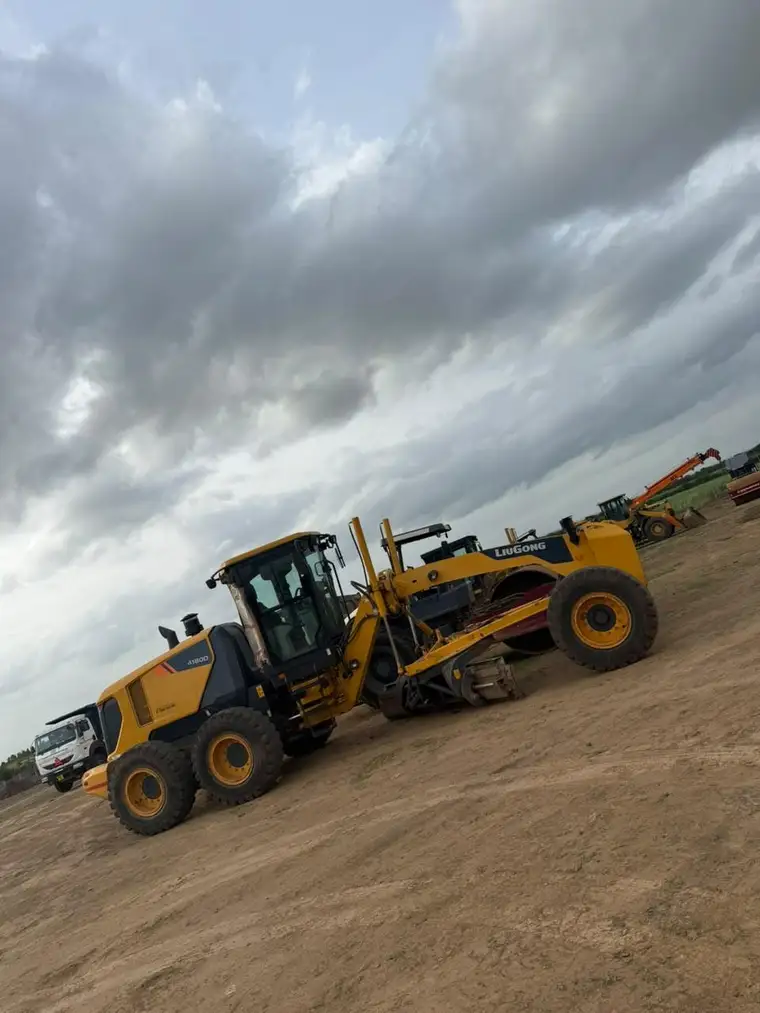
We own three road rollers and two motor graders, with tractors and water tankers for moisture conditioning, in the same owned fleet as the excavators and tippers that feed the fill. Owned matters for a plain reason: a roller hired by the day goes back when the hire ends, whether or not the last set of tests is in. Specifications get revised and the contract governs, so build to the edition your agreement names. The other number a sub-grade is judged on is strength: CBR and what it does to pavement thickness.
Standards and sources
- MoRTH Specifications for Road and Bridge Works, Fifth Revision (2013), Section 305: Clauses 305.2.1.1 and 305.3.5.1, Tables 300-1 and 300-2
- MoRTH Specifications for Road and Bridge Works, Fifth Revision (2013), Section 900: Clause 903.2.2 and Table 900-1
- IS 2720 (Part 8):1983, heavy compaction, and IS 2720 (Part 7):1980, light compaction
- IS 2720 (Part 28):1974, field dry density by sand replacement, and IS 2720 (Part 40), free swell index
- Roller, grader and fleet figures: SM Infra's own operating record
Your contract and its technical schedules override anything written here. Check the clause before you build to it.