
In short
- A fixed crusher plant is moved by stripping it into road loads: crushers, screens and feeders whole on low-bed trailers, conveyors and structure in sections.
- A load is over-dimensional when it exceeds Rule 93 of the Central Motor Vehicles Rules: 2.6 m wide, 4.0 m high (4.75 m for an indivisible load) and 18.75 m long for a tractor and semi-trailer.
- Most of a plant can be cut down to fit. What cannot is permitted load by load and state by state, and the route survey matters more than the form.
- On a site with reasonable access we allow two weeks to move and two weeks to erect and commission.
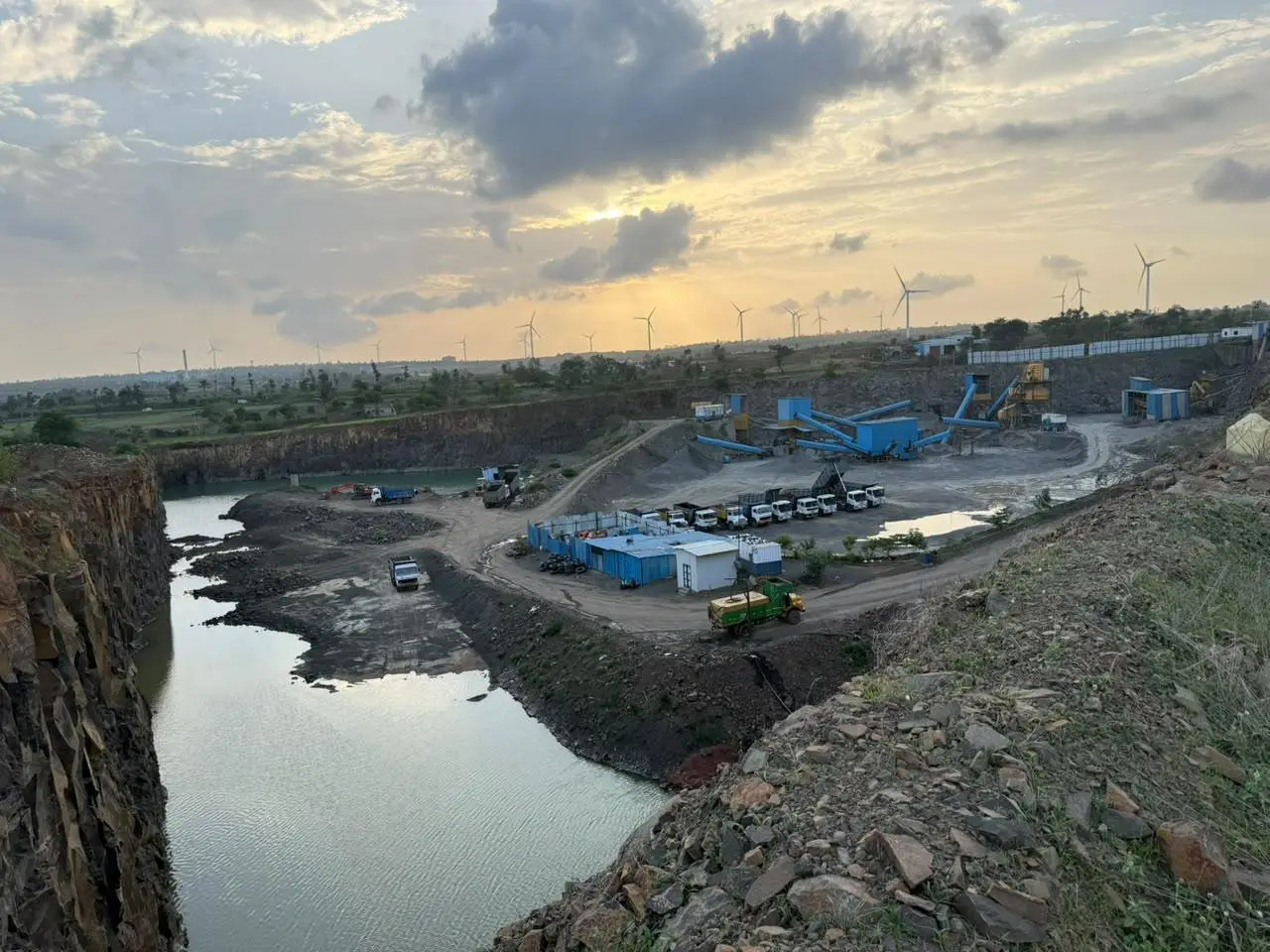
A highway package finishes, the next one is in another state, and the plant has to follow the work. A crusher plant earns only while it is running, so the question is how soon it can be crushing somewhere else.
The plant is stripped into loads that are legal on the road. The few pieces that cannot be made legal travel on low-bed trailers as over-dimensional cargo, under permission. Everything is re-erected on foundations cast at the new site. With reasonable access we allow about two weeks for the move and two to erect and commission, and the road is the easier fortnight.
What a fixed plant breaks down into
- Crushers. Primary jaw, secondary cone and the tertiary machine, each lifted off its frame in one piece. These are the dense loads and they ride on the low-beds.
- Screens and feeders. They travel whole. A screen box is light for its size and wide, so it tends to be the width problem.
- Conveyors. Split at the bolted joints into sections, with belts rolled separately.
- Structure. Hopper, chutes, platforms, legs and walkways, unbolted and stacked.
- Electricals. Control panels, motors, cable and gensets, packed against dust and rain.
- The weighbridge. Lifted, relaid and calibrated again at the new site.
Every joint broken is a joint to remake, align and test at the other end, so a plant is stripped to what the road allows and no further.
When a load becomes over-dimensional
The limits sit in Rule 93 of the Central Motor Vehicles Rules, 1989, as substituted by the Sixth Amendment Rules of 2020 (G.S.R. 414(E), 26 June 2020). A load inside them is ordinary cargo. A single indivisible unit that exceeds them is over-dimensional cargo, ODC, and moves only with permission.
| Vehicle | Width | Length | Height |
|---|---|---|---|
| Rigid goods vehicle (N2, N3) | 2.6 m | 12.0 m | 4.0 m |
| Tractor with semi-trailer; truck and trailer | 2.6 m | 18.75 m | 4.0 m |
| Road train | 2.6 m | 25.25 m | 4.5 m |
Height may go to 4.75 m for an indivisible load. Such a load may project up to 200 mm on each side of a 2.6 m vehicle if it carries yellow and black reflective marking and end lamps. Rules are amended, so check the text in force before planning a load to the last 50 mm.
Weight is a separate test. The 2018 axle-load notification, S.O. 3467(E), caps a tractor and semi-trailer combination at 55 tonnes gross, modular hydraulic trailers excepted. We print no component weights here because they differ by make and model: read the manufacturer's plate and weigh the loaded trailer. In practice the crushers raise the weight question; screens, hopper and long conveyor frames raise the dimension question.
Permissions: central, state and the route itself
For single indivisible consignments on modular hydraulic trailers, MoRTH runs an online permission system for over-dimensional and over-weight cargo, set out in its circular of 10 June 2020. Its operating conditions give the flavour: 5 km/h or less over bridges with no braking on the deck, the load kept within 300 mm of the carriageway centreline, no movement in wind above 40 km/h. Moving without permission brings a double fee and at least seven days' detention.
Most crusher plant loads never reach that class. They go on ordinary low-bed semi-trailers, a little wide or a little high, and the permissions that matter for them come from the transport authorities and traffic police of each state on the route. Escorts and the hours in which a wide load may move are written into the individual permit and into local orders, and differ from state to state, so we do not quote them.
The route survey decides more than the paperwork does. Somebody drives it beforehand with the loaded dimensions in hand and looks at bridges, low electric and telephone wires, ghat bends a long trailer cannot swing through, village streets, and weak culverts on the last few kilometres of approach road. That last stretch is where a move most often stalls.
Loading in the order the other end needs
Trailers reach the new site days apart, and the order they arrive in sets how soon erection can start. So the loading sequence follows the erection sequence, not the convenience of the stripping gang. First out is what the foundation crew needs: holding-down bolts and their templates, base frames, shuttering, a genset and the welding sets. Crushers follow, because they sit lowest. Then structure, screens and conveyors, with panels and cable last and under cover.
The move, stage by stage
| Stage | What happens | What can delay it |
|---|---|---|
| Survey | New site walked, plant position fixed, route driven | An approach road that will not take a low-bed |
| Strip-down | Plant emptied, unbolted into road loads, every piece marked | Seized fasteners, an undersized crane |
| Permits | State permissions for the wide and high loads | A late application, a route changed after survey |
| Road move | Low-beds for crushers, flat trailers for sections. About two weeks | Monsoon, a closed bridge, restricted hours |
| Foundations | Cast to the plant's drawings at the new site | Rain, bolts cast out of position |
| Erection and commissioning | Structure raised, crushers set, belts and electricals run, decks set to the grading. About two weeks | Missing parts, no power, a consent not yet cleared |
Durations are from our own moves on sites with reasonable access.
Why re-erection is the hard half
A trailer either arrives or it does not. A re-erected plant can be standing, powered and turning and still not producing. Foundations have to be level, with the bolts where the frames expect them. Conveyors have to track. Crusher settings and screen decks have to be reset, because hard basalt and soft sandstone want different settings and different wear parts. Then the material has to pass the grading in the new contract before a tonne is invoiced.
Some paperwork moves more slowly than steel. Pollution board consents attach to a plant at a location, so the new site needs its own, and the clearances a crusher plant needs should be in hand before trailers are booked. The first 30 days of a plant set-up takes the erection month in order.
What we move with
We own two low-bed trailers, and our crews have dismantled, moved and re-erected our crusher plants across ten states. On the Manipur hill packages of 2020 to 2021, worked by our crews under Sansar Infra LLP, the site was two thousand kilometres from base and getting plant and crew there was half the contract.
If the plant is yours and it is standing between projects, the same crews will move it. Send the make, the stages and both locations, and our plant relocation crews can say which loads are likely to need permission.
Standards and sources
- Central Motor Vehicles Rules, 1989, Rule 93, as substituted by the Central Motor Vehicles (Sixth Amendment) Rules, 2020, G.S.R. 414(E), 26 June 2020: vehicle and load dimensions
- Ministry of Road Transport and Highways circular of 10 June 2020: online permission for over-dimensional and over-weight consignments on modular hydraulic trailers
- Ministry of Road Transport and Highways notification S.O. 3467(E), 16 July 2018: gross vehicle weight caps
- Mobilisation, erection and plant relocation: SM Infra's own operating record, including work under Sansar Infra LLP before October 2024
Your contract and its technical schedules override anything written here. Check the clause before you build to it.